Key Takeaways:
- Wall Street Moves Tokenization into Production
- CLARITY Act Vote Delayed Until September
- Bitcoin's Largest Institutions Commit $15 Million to Protocol Security
Wall Street Moves Tokenization into Production
The Depository Trust & Clearing Corporation (DTCC), the backbone of U.S. capital markets, successfully processed its first live production transactions using tokenized securities on July 15, marking one of the most significant milestones in the institutional adoption of blockchain technology. The initiative involved more than 30 leading financial institutions, including BlackRock, J.P. Morgan, Goldman Sachs, Vanguard, NYSE, Nasdaq, CME Group and Tradeweb, alongside digital asset firms such as Circle, Chainlink, Ondo Finance and Temple Digital Group, one of Eterna Capital's portfolio companies. During the production event, DTCC converted securities held at The Depository Trust Company (DTC) into on-chain representations that were subsequently used in live transactions spanning U.S. Treasuries, equities, collateral management, securities lending and margin workflows. The successful demonstration paves the way for the commercial launch of DTCC's Tokenization Service in Q4 2026. DTCC currently safeguards more than $114 trillion of securities and processes approximately $4.7 quadrillion of transactions annually, underscoring the scale of the infrastructure now embracing blockchain technology.
The significance extends well beyond another tokenization pilot. Unlike many existing tokenized securities that rely on third-party wrappers, DTCC's model creates tokenized representations directly linked to DTC-custodied securities, preserving the same legal ownership rights, dividends and investor protections as traditional assets while enabling them to move seamlessly across blockchain networks. This represents a fundamental evolution of market infrastructure rather than the creation of parallel crypto markets. The participation of both Wall Street incumbents and digital asset firms highlights how tokenization is increasingly becoming a collaborative effort between traditional finance and blockchain-native companies. As regulated financial infrastructure begins supporting digital assets at institutional scale, the conversation is shifting from whether capital markets will tokenize to how quickly core post-trade functions such as settlement, collateral mobility and liquidity management migrate onto blockchain rails.
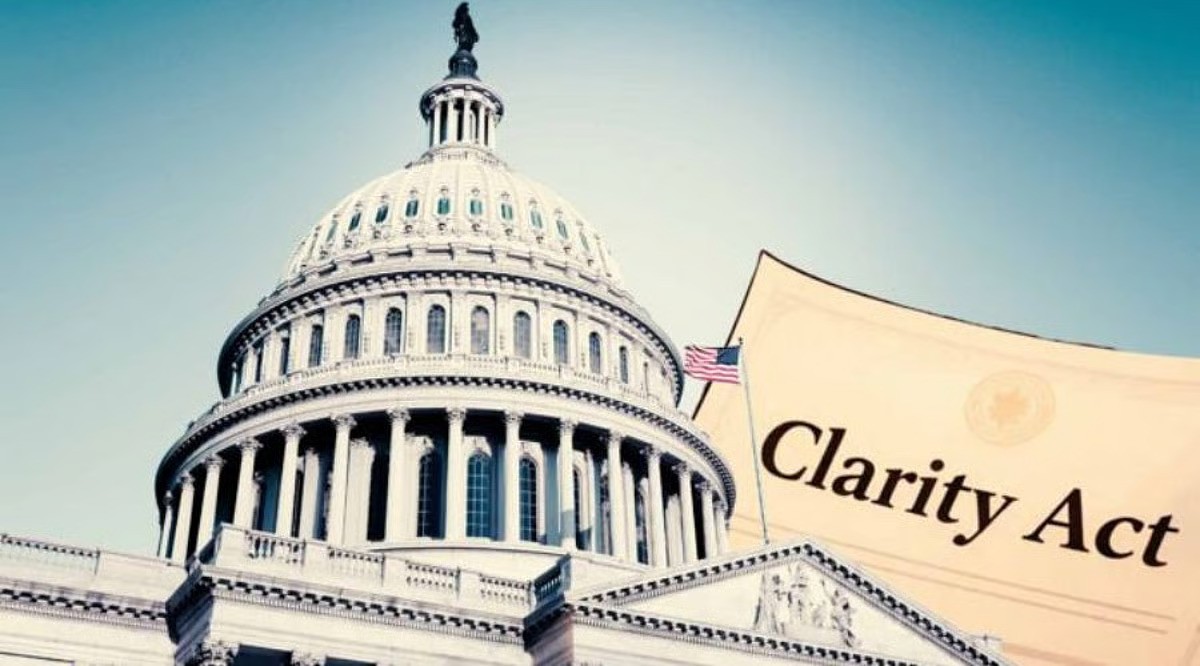
CLARITY Act Vote Delayed Until September
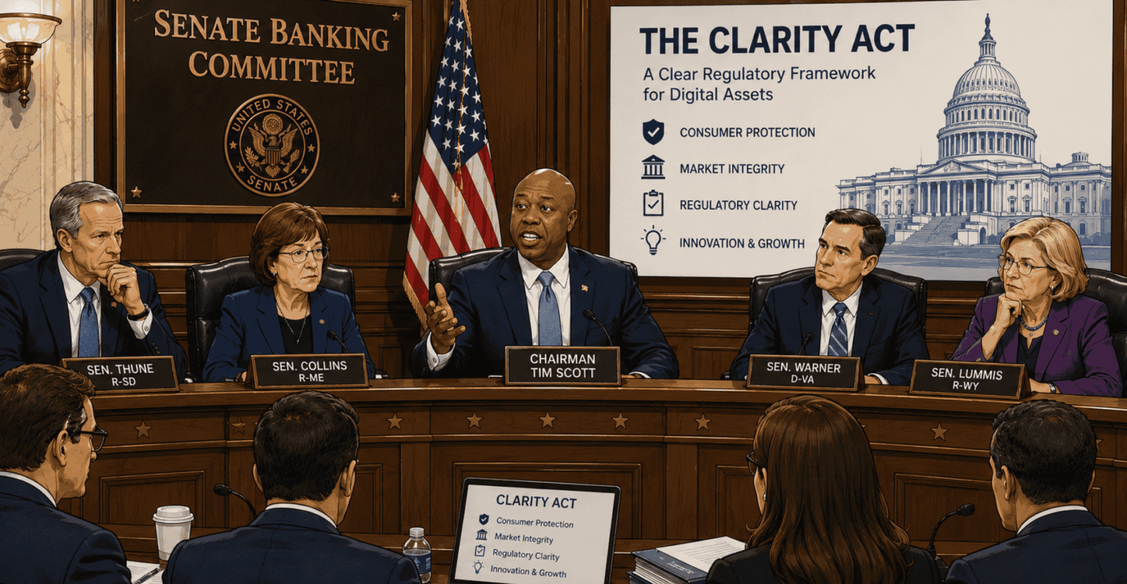
Momentum behind U.S. digital asset regulation slowed during July after Senate leadership acknowledged that the CLARITY Act would not receive a final floor vote before Congress adjourned for its August recess. Although lawmakers successfully consolidated the Banking and Agriculture Committee drafts into a comprehensive 616-page market structure bill, negotiations over ethics provisions and bipartisan support prevented Senate leaders from advancing the legislation before lawmakers left Washington. Treasury Secretary Scott Bessent recently described the bill as being on the "one-yard line," but Senate Majority Leader John Thune subsequently confirmed that completing the legislative process before recess was unlikely.
While the delay is disappointing, it reflects political timing more than disagreement over the need for digital asset legislation. The debate has shifted materially over the past two years - from questioning whether crypto should be regulated at all to negotiating the final details of market structure. September now represents a critical window. Failure to advance CLARITY before year-end would likely push comprehensive legislation further into the U.S. political calendar, while continued delays risk ceding regulatory leadership to jurisdictions such as the European Union, the UAE and Singapore, all of which have already implemented comprehensive digital asset frameworks.

Bitcoin's Largest Institutions Commit $15 Million to Protocol Security
Nine of the largest institutional participants in Bitcoin - including BlackRock, Fidelity Digital Assets, Coinbase, Strategy, Block, Galaxy, Anchorage Digital, ARK Invest and Blockstream - announced the creation of the Bitcoin Security Consortium, committing $15 million over the next three years to fund Bitcoin protocol security research and open-source development. Coordinated by Brink Executive Director Mike Schmidt, the consortium is designed solely as a funding initiative rather than a governance body, supporting Bitcoin Core developers without influencing protocol decisions. The announcement comes as institutional ownership of Bitcoin has expanded rapidly through ETFs, public companies and custodians, increasing attention on long-term protocol resilience and post-quantum cryptography.
The initiative highlights an important evolution in Bitcoin's maturity as a financial network. Critical infrastructure securing hundreds of billions of dollars has historically relied on relatively modest nonprofit funding, creating an imbalance between the economic value secured by the network and the resources dedicated to maintaining it. Rather than introducing centralized governance, the consortium establishes a sustainable funding model similar to other mission-critical open-source software projects. As institutional participation continues to grow, we expect long-term investment in protocol security to become an increasingly important component of digital asset infrastructure.

Open-Weight AI Sparks the Industry's Biggest Strategic Divide
Artificial intelligence experienced its own regulatory and competitive inflection point during July as leading technology companies publicly split over the future of open-weight models. Nvidia, Microsoft, Hugging Face, Andreessen Horowitz, Google and OpenAI signed the "Open Weights and American AI Leadership" letter advocating continued support for open-weight AI, while Anthropic responded separately by calling for mandatory safety testing of increasingly capable frontier models. The debate intensified following the rapid progress of Chinese open-weight models, particularly Moonshot AI's Kimi K3, which now approaches frontier-model performance while operating at a fraction of the cost.
The discussion extends well beyond AI policy. Over the past year, frontier model providers competed primarily on intelligence, but open-weight models are rapidly commoditizing inference and reshaping enterprise adoption. Many organizations are beginning to route routine workloads through inexpensive open models while reserving premium proprietary systems for specialized reasoning tasks. The debate increasingly resembles the one that shaped blockchain over the past decade: whether foundational digital infrastructure should remain open and broadly accessible or become concentrated within a handful of large platforms. The outcome will have significant implications not only for AI, but also for the future convergence between decentralized infrastructure, autonomous agents and on-chain financial systems.
Disclaimer: This post has been prepared for general informational purposes only and reflects the current views of its authors. The views expressed do not necessarily represent those of Eterna Capital, its affiliates, or individuals associated with Eterna Capital, and may change without notice. Nothing contained herein constitutes or should be construed as investment, legal, accounting, or tax advice, or as a recommendation, offer, or solicitation to buy or sell any investment. This material should not be relied upon to evaluate the merits of any investment decision. Eterna Capital makes no representation or warranty, express or implied, regarding the accuracy, completeness, or reliability of the information contained herein. All liability in connection with this material and any reliance thereon is expressly disclaimed.